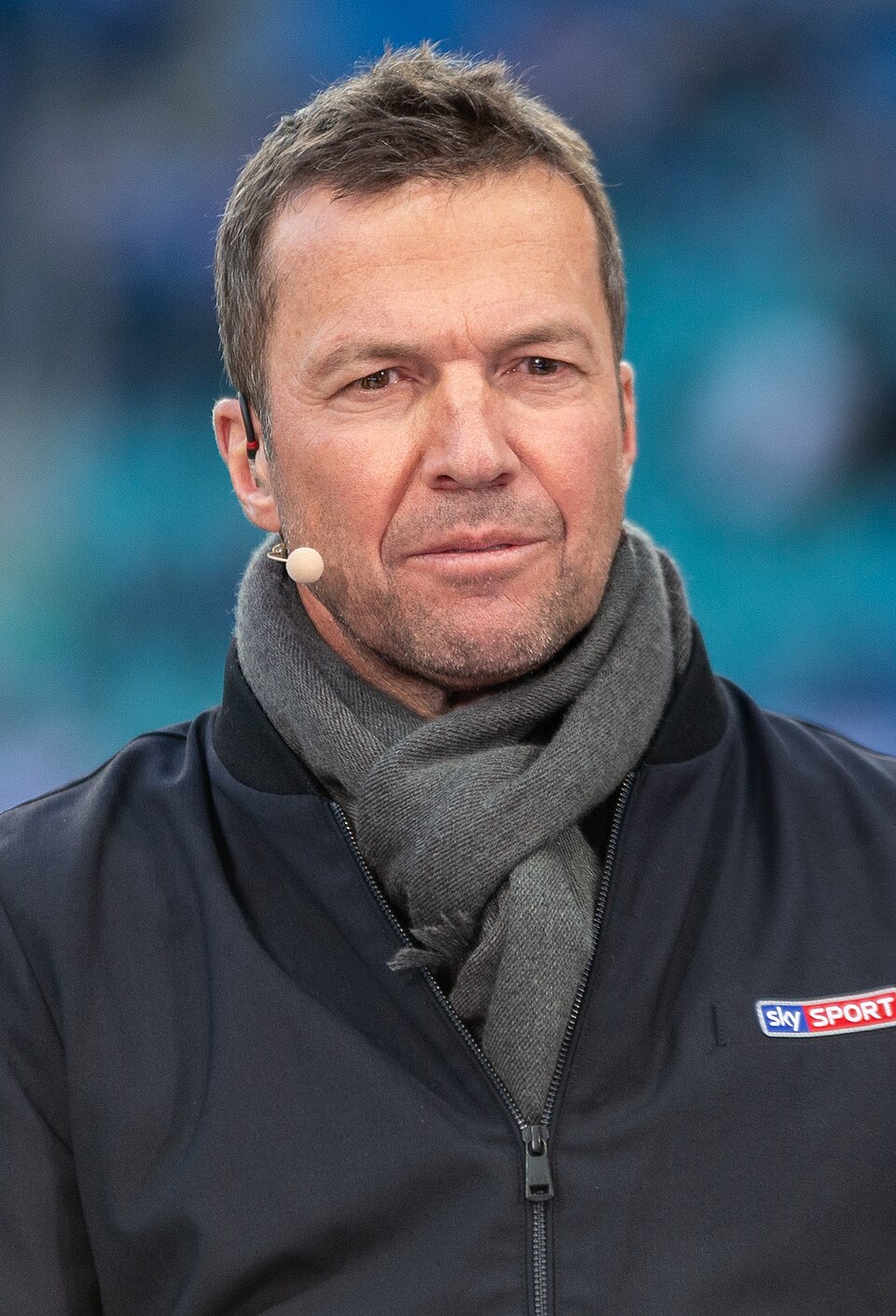
Lothar Matthäus: Born 1961, A Football Icon's Storied Career
Few names resonate with the power and legacy of German football quite like Lothar Matthäus. A true colossus of the game, his career spanned decades, touching upon multiple eras of football and leaving an indelible mark on both club and international stages. For those asking, "Wann ist Lothar Matthäus geboren?" (When was Lothar Matthäus born?), the answer marks the beginning of an extraordinary journey: March 21, 1961, in Erlangen, West Germany. This birth year heralded the arrival of a player who would redefine longevity, versatility, and sheer competitive drive in the beautiful game.
Matthäus's impact wasn't just about the trophies he lifted or the records he shattered; it was about his unwavering commitment, his tactical intelligence, and a powerful shot that could turn games. From his early days in the Bundesliga to his international swansong, his career is a masterclass in sustained excellence. Let's delve into the incredible narrative of Lothar Matthäus, a player whose 1961 birth year set the stage for an unparalleled footballing saga.
The Formative Years: From Erlangen to Professional Debut
Born on March 21, 1961, in Erlangen, Lothar Matthäus was destined for greatness from an early age. His journey into professional football began with Borussia Mönchengladbach, where he made his professional debut in 1979. It was clear even then that this young midfielder possessed a rare combination of raw talent, physical prowess, and an innate understanding of the game.
His impressive performances at club level quickly caught the attention of the national team selectors. Just a year after his professional debut, Matthäus earned his first international cap for West Germany in 1980. This rapid ascent saw him included in the squad for the 1980 European Championship, an incredible achievement for a player so early in his career. While he may not have been a central figure in that tournament, the experience of being among the elite at such a young age undoubtedly forged his character and sharpened his ambitions.
During these formative years, Matthäus honed the skills that would define his career: an incredible engine to cover ground, precise passing, formidable tackling, and a penchant for scoring crucial goals from midfield. It was a foundation built on relentless hard work and a burning desire to compete at the very highest level, qualities that would serve him throughout his historic career.
A Titan of Club Football: Bayern Munich, Inter Milan, and Beyond
Matthäus's club career reads like a who's who of European football giants, punctuated by triumphant stints that saw him collect a staggering array of domestic and continental honours. His first major move came in 1984, joining Bayern Munich. This was the start of what would become an iconic relationship with the Bavarian powerhouse, initially spanning four successful years until 1988. During this period, Matthäus was instrumental in Bayern securing three German league championships (1985, 1987) and the West German Cup in 1986, establishing himself as a formidable presence in the heart of their midfield.
Seeking new challenges and the allure of Italian football, Matthäus moved to Inter Milan in 1988. The Italian Serie A of the late 1980s and early 1990s was arguably the strongest league in the world, a tactical battleground demanding immense skill and mental fortitude. Matthäus thrived in this environment, leading Inter to the Serie A title in 1989, a truly monumental achievement against fierce competition. His time in Italy was further sweetened by a UEFA Cup triumph in 1991, showcasing his ability to deliver on the European stage. Playing alongside fellow German legends like Andreas Brehme and Jürgen Klinsmann, he formed an unforgettable core that etched their names into Inter's history.
In 1992, Matthäus made a much-anticipated return to Bayern Munich, embarking on his second and even longer tenure that lasted until 2000. This second spell cemented his legendary status at the club, adding another three German league championships (1994, 1997, 1999) and the German Cup in 1998 to his vast collection. He also added another UEFA Cup title in 1996, further demonstrating his enduring class. During this period, Matthäus seamlessly transitioned his role, moving from a dynamic attacking midfielder to an equally adept and intelligent libero or sweeper in defense, a testament to his tactical understanding and adaptability. His longevity and ability to perform at the highest level well into his late 30s were nothing short of remarkable.
He concluded his illustrious club career in the United States with the New York–New Jersey MetroStars in the summer of 2000, bringing an end to a club journey that saw him conquer Germany and Italy with grace and power.
The World Cup Maestro: Five Appearances, One Triumph
If Matthäus's club career was impressive, his international career was truly legendary. He holds a unique and unparalleled record: the only outfield player in the history of football to compete in five FIFA World Cups. This extraordinary feat, spanning from 1982 to 1998, speaks volumes about his sustained fitness, consistent performance, and vital importance to the German national team. For a deeper dive into this incredible achievement, you might find Lothar Matthäus: From 1961 Birth to Five World Cup Appearances particularly enlightening.
His World Cup journey began in 1982, followed by appearances in 1986, 1990, 1994, and 1998. Each tournament saw a different facet of Matthäus, evolving from a promising youngster to a seasoned leader. The pinnacle of his international career arrived in 1990, where he captained the German side to a memorable World Cup title. His performances throughout that tournament were nothing short of sensational, scoring four goals and dictating play from midfield with an almost imperious authority. His iconic long-range strike against Yugoslavia remains a classic World Cup moment.
Beyond the World Cup triumphs, Matthäus also featured prominently in the 1980 European Championship squad, further solidifying his status as a perennial presence on the international stage. By the time he retired from international play in 2000, he had amassed an astounding 150 caps for Germany, a record that underscores his incredible dedication and influence. His ability to lead, inspire, and perform under the immense pressure of international tournaments makes him a true icon of the global game.
The lessons from Matthäus's international career extend beyond mere statistics. His ability to adapt to different coaching styles, changing team dynamics, and the physical demands of high-stakes tournaments for nearly two decades offers invaluable insights into athlete longevity and peak performance. It's a testament to meticulous preparation, mental toughness, and a genuine passion for the game.
Individual Accolades and Enduring Legacy
Lothar Matthäus's exceptional talent did not go unnoticed by the wider footballing world. His sensational performances, especially during his peak years, earned him some of the most prestigious individual awards in football. In 1990, the year he captained Germany to World Cup glory, he was deservedly named European Footballer of the Year (Ballon d'Or). This honour recognized his unparalleled influence and masterful displays throughout the season. The accolades continued into the following years, as he was also crowned World Footballer of the Year in both 1990 and 1991, cementing his status as the best player on the planet during that period.
His playing style was characterized by remarkable physical fitness, an astute footballing intelligence, and a powerful, accurate shot that often caught goalkeepers by surprise. Whether orchestrating play from midfield or marshalling the defense, Matthäus approached every game with intensity and tactical acumen. His versatility was a key asset, allowing him to excel in various roles as the game evolved.
After retiring as a player, Matthäus embarked on a coaching career. While he held positions with several clubs and national teams across different continents, including stints in Austria, Serbia, Brazil, and with the Hungarian and Bulgarian national teams, his coaching success, unfortunately, did not mirror the extraordinary achievements of his playing days. This disparity is a common narrative for many legendary players, highlighting the unique challenges and different skill sets required for management.
Nevertheless, his legacy as a player remains untarnished. Lothar Matthäus is celebrated not just for his numerous titles and individual honours, but for his sheer presence, his leadership, and his incredible consistency at the highest level for over two decades. He epitomizes the German footballing spirit: relentless, disciplined, and utterly dedicated to success.
From his birth on March 21, 1961, in Erlangen, Lothar Matthäus carved out a career that few can rival. He remains a revered figure, a living legend whose contributions to football continue to inspire generations. His story is a powerful reminder that true greatness in sports is forged through a combination of talent, hard work, and an unyielding will to win, leaving an enduring imprint on the beautiful game.